
Benson Proposes $5K Caregiver Tax Credit
(Source: MIRS.news, Published 01/08/2026) Democratic gubernatorial frontrunner Jocelyn Benson Thursday proposed a $5,000 caregiver tax credit as part of a health care reform agenda that she sees as a top campaign priority in 2026.
The sitting Secretary of State noted that Michigan is dealing with a growing aged population that some have called a “senior tsunami.”
"Caregivers need support, so we’re going to expand counseling services for seniors and provide a $5,000 caregiver tax credit,” she said during her first press conference of 2026.
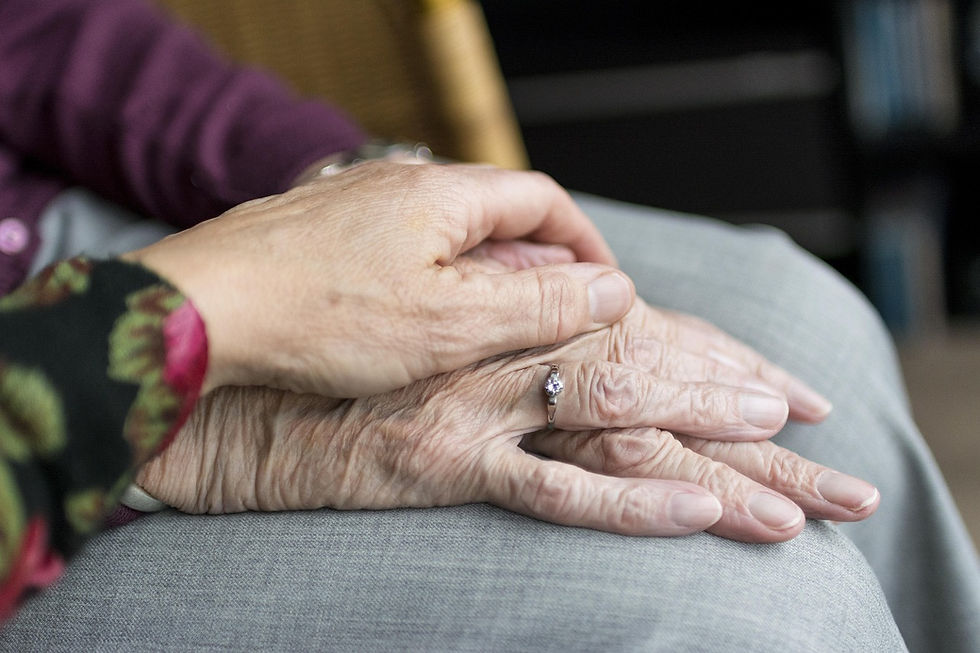
Caregiver tax credits aren't new concepts. In her 2024 State of the State address, Gov. Gretchen Whitmer introduced the MI Family Tax Credit that offered up as much as $5,000 in out-of-pocket caregiver reimbursements.
Also, last year, Rep. Kathy Schmaltz (R-Jackson) proposed allowing family members who oversee the care of struggling family members to be able to write off 30% of their out-of-pocket expenses up to $2,000 on their income taxes.
In laying out her health care agenda, Benson started with a pledge that she would do for the Department of Health and Human Services (DHHS) what she did for the Department of State.
“The bottom line for me is this: the next governor of Michigan must be prepared on Day 1 to leverage every tool in the toolbox to ensure health care is affordable, accessible and fair in our state,” Benson said.
She said for affordability she would give power to DHHS to “demand transparency” from the state’s Medicaid program, increase access to financial counseling, implement debt-forgiveness programs, and limit hospital collections.
She said she would work with the Legislature to put together a health care affordability board with healthcare providers and patients to look at the overall cost of healthcare and find ways to reduce those costs.
“It has to be a priority for every leader in the state to fix this system, and we’ll work together to do it based on data, based on best practices, not based on partisanship. That will be my expectation for every public servant elected to serve in this state,” she said.
She said she’s been able to achieve many wins in the Legislature, even as Secretary of State with chambers. It would be her job to build the critical mass needed to get a prescription drug affordability board across the finish line.
On accessibility, Benson said DHHS was too big, outdated, and complicated. Her plans are to reform it using the same techniques she implemented at the Secretary of State’s branch offices.
She said there can’t be any reform, regardless of what is passed by the Legislature, if it can’t be implemented by DHHS.
“That’s why the centerpiece of my plan is recognizing that an outdated infrastructure bogs down MDHHS, and that’s what we have to fix in order to achieve any of these outcomes. The agency is overburdened. It’s under-resourced, and it’s a safety net system that’s failing,” she said.
The last section she talked about was fairness, and she said that meant presenting health care data to people in a way that they would be able to understand. That meant technology and making appeals for determinations easier for patients.
She said to make it fair for hospitals, especially rural hospitals, she talked about helping address the workforce shortage and said she was “eager” to work with hospital management to address funding problems.
“I see hospitals not just as critical providers of care, but also as critical employers in the communities in which they serve,” she said.
With rumors swirling that Lt. Gov. Garlin Gilchrist II would be dropping out to run for Secretary of State, Benson said that hasn’t changed how she’s approaching the primary or general election.
She said Gilchrist is a friend, and she knew him since before he was lieutenant governor.
“My focus has been on not just building a broad-based coalition of support to support my candidacy, so that we’re poised to win not just the primary, but also the general election in November,” she said.


